Create goals across lifetime, yearly, quarterly, monthly, and shorter horizons.
Break outcomes into milestones and sub-goals.
Pin a North Star goal so long-term direction stays visible.
Review progress from manual updates and linked activity.
Selected screenshots
The Goals module in use.
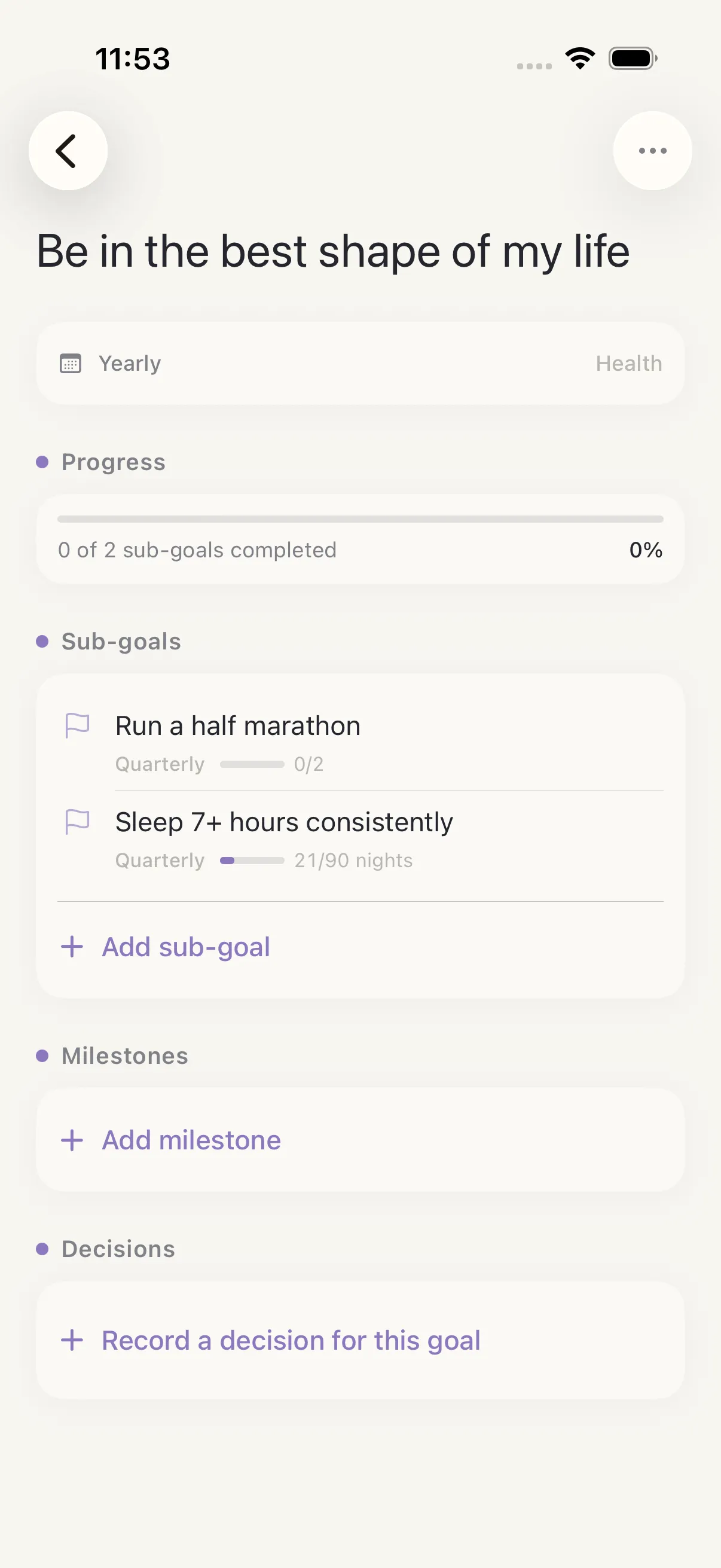
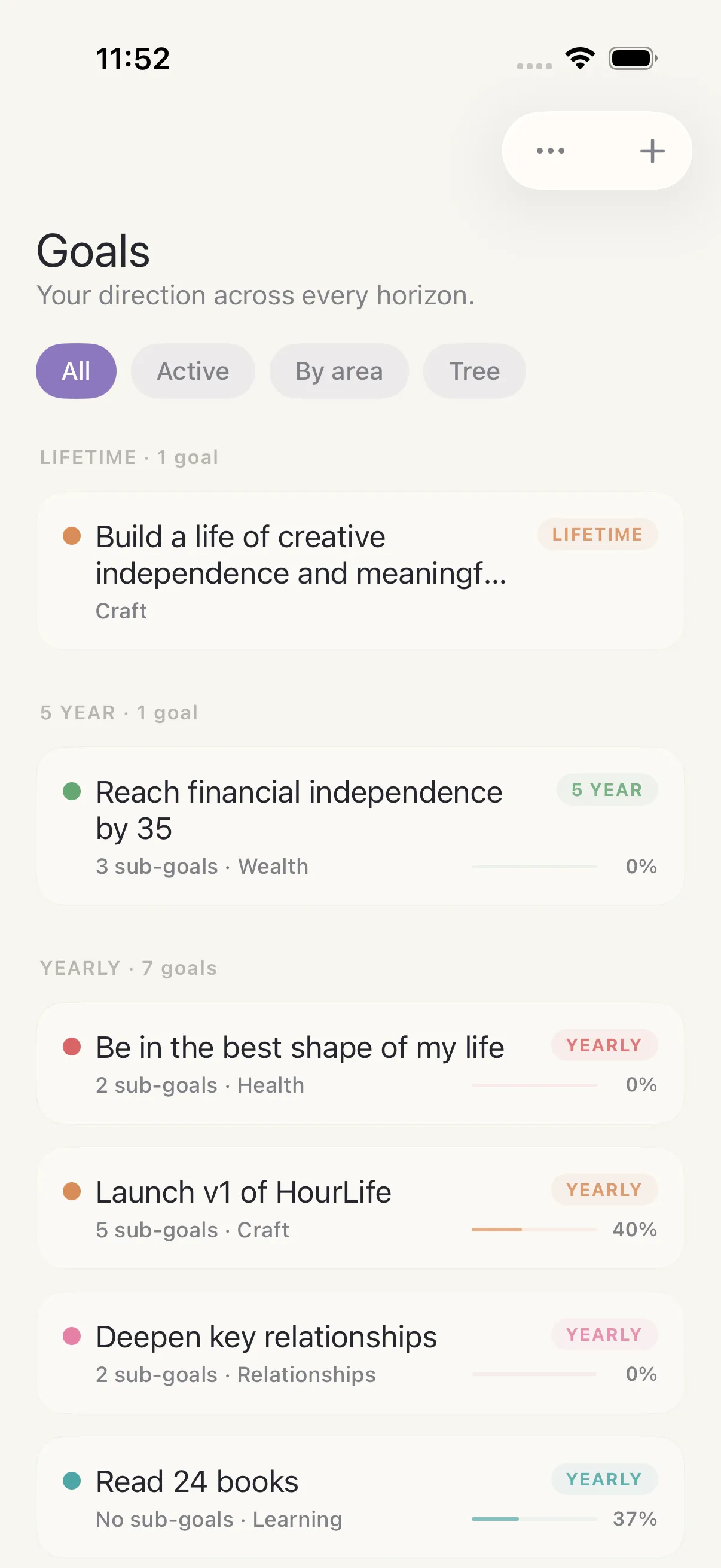
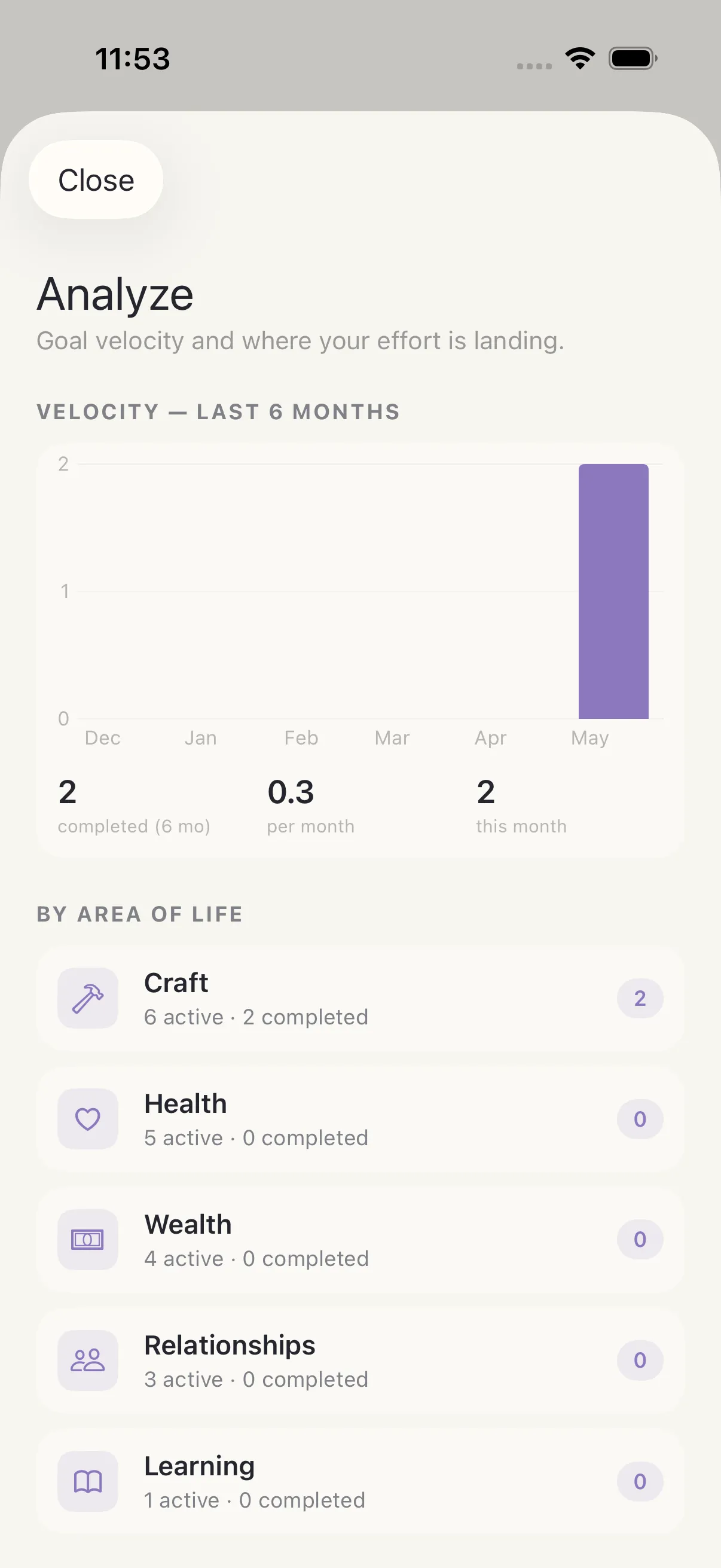
The index shows the client’s portfolio of goals, while detail and analysis screenshots show how outcomes become measurable and reviewable.
Goal portfolio
A clear view of active outcomes across horizons.
Goal detail
Progress, milestones, and sub-goals in one outcome record.
Goal analysis
Insight views for alignment, progress, and attention.
Workflows
The goal flow from intention to review.
Define
Name the outcome clearly.
Choose the horizon and life area so the goal has context.
Structure
Break the outcome into smaller commitments.
Use milestones, sub-goals, and parent links to make progress visible.
Prioritize
Keep the North Star visible.
Pin the highest-order direction so other commitments can be judged against it.
Execute
Connect goals to the work that moves them.
Attach habits, tasks, projects, and related records.
Update
Log progress without over-maintaining.
Use manual progress and linked activity as evidence.
Review
Use insights to adjust direction.
Analysis views show whether the system is supporting the goal.
How I use it
How a client uses Goals to stay aligned.
Goals is the strategic layer. Clients use it when they need to decide what matters over weeks, months, and years, then connect that direction to daily behavior.
1Create the goal and choose the horizon that matches the commitment.
2Assign a life area so the goal contributes to a balanced life system.
3Add milestones or sub-goals when the outcome needs structure.
4Link habits, tasks, and projects that move the goal forward.
5Review progress and adjust the plan before drift becomes obvious.
Features
What Goals includes.
Multiple horizons
Goals can represent long-term direction or near-term targets without flattening them into one list.
Milestones and sub-goals
Large outcomes can be broken into smaller commitments that make progress easier to inspect.
North Star pinning
A client can keep the most important direction visible across reviews.
Progress logging
Manual updates and linked activity both contribute to the record of movement.
Life-area context
Goals can be understood as part of a broader life balance, not just productivity.
Analysis views
Review screens help clients see alignment, momentum, and gaps.
Connected system
Goals connects to the rest of HourLife.
The module is strongest when its records can inform Today, reviews, and the surrounding life system.
Today
Tasks
Habits
Projects
Life Areas
Calendar
Compass
Next step
Use Goals to keep direction visible.
It gives clients a practical bridge between long-term outcomes and daily behavior.
Ask a question about this feature or tell us what’s missing.
We would like to use Google Analytics to see which pages are worth keeping.
It is off until you say yes, and the site works exactly the same either way.
How we handle your data.
Google Analytics is currently on.
We use it to see which pages are worth keeping, and nothing else. You can
change that whenever you like — the site works exactly the same either way.
How we handle your data.