Early specialization can look efficient while quietly narrowing the map of possible fit.
Epstein reframes exploration as data collection: trying more paths can make later commitment sharper, not weaker.
6 memorable lines from Range by David Epstein, each with the idea behind it.
As an Amazon Associate, HourLife earns from qualifying purchases.
Lines labelled “HourLife takeaway” are our wording of the book’s ideas and may paraphrase it. Only lines in quotation marks are the author’s own words, with where they appear. Check the book for exact wording before you quote it. Spot an error?
Early specialization can look efficient while quietly narrowing the map of possible fit.
Epstein reframes exploration as data collection: trying more paths can make later commitment sharper, not weaker.
Wicked environments reward people who can transfer ideas, not just repeat procedures.
When rules shift and feedback arrives late, breadth becomes a practical advantage for pattern recognition.
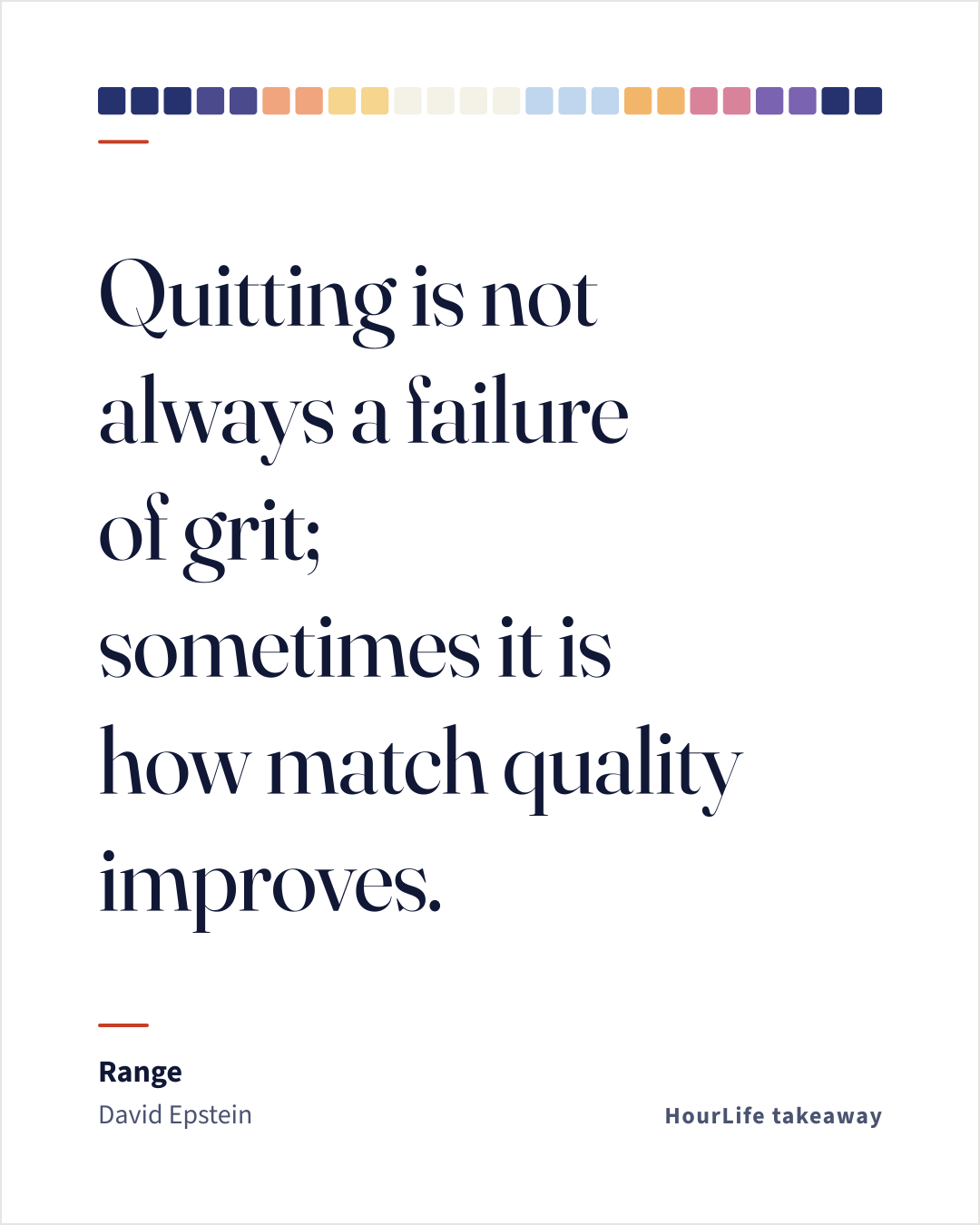
Quitting is not always a failure of grit; sometimes it is how match quality improves.
Range gives permission to leave a poor-fit path before sunk cost becomes identity.
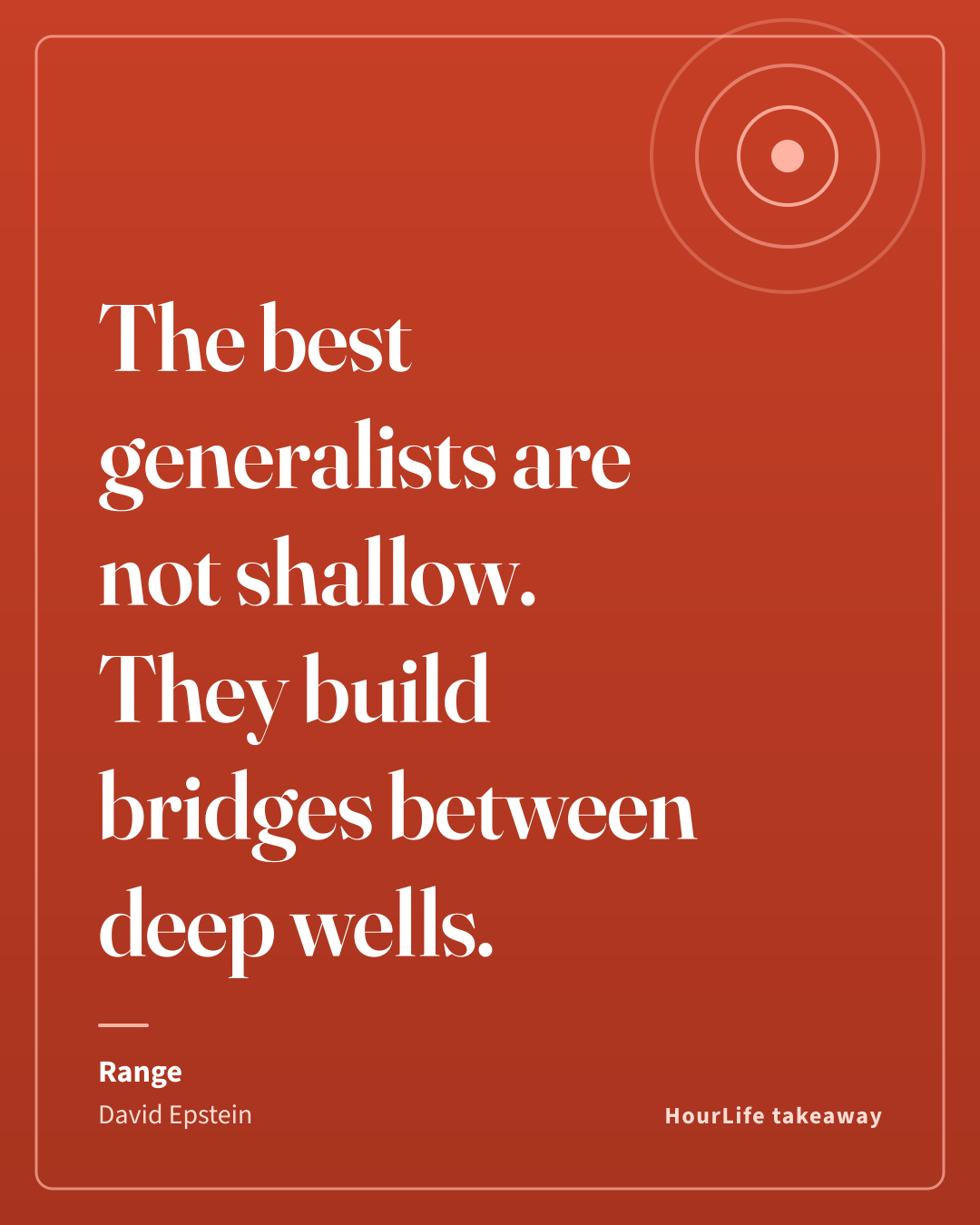
The best generalists are not shallow. They build bridges between deep wells.
The book's strongest argument is for connected breadth: enough depth to understand, enough distance to compare.
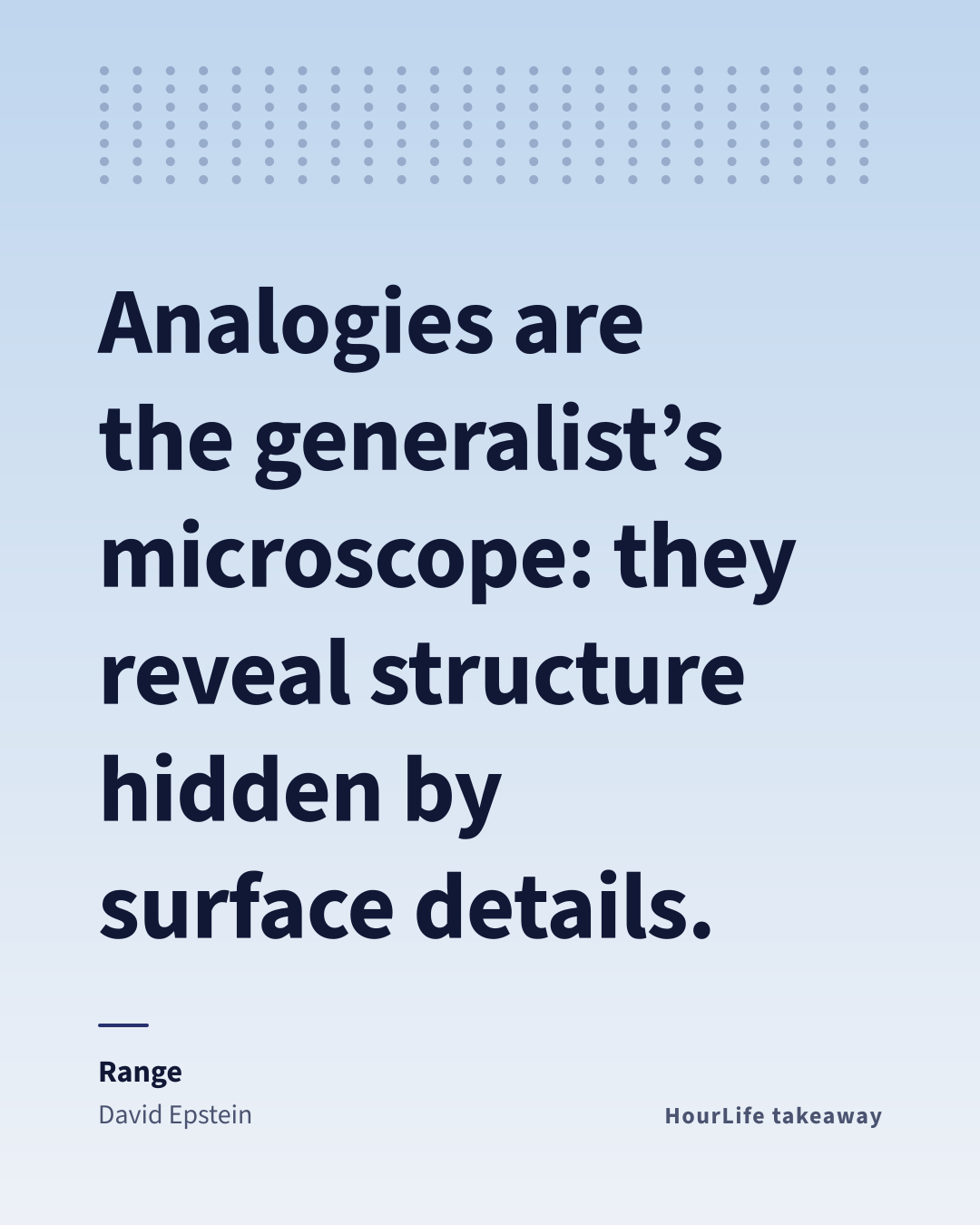
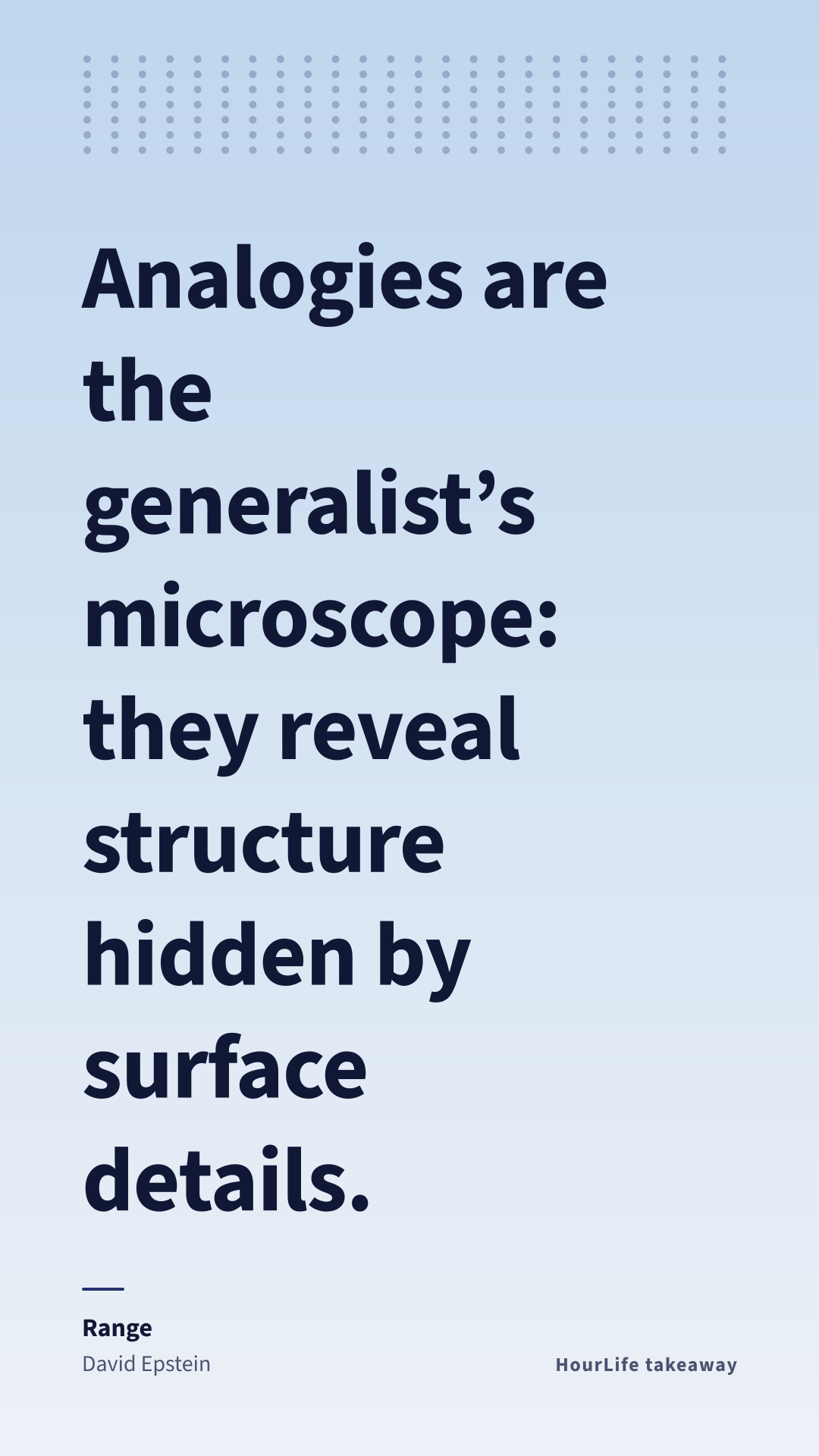
Analogies are the generalist’s microscope: they reveal structure hidden by surface details.
Distant examples can make a hard problem solvable by changing the frame around it.
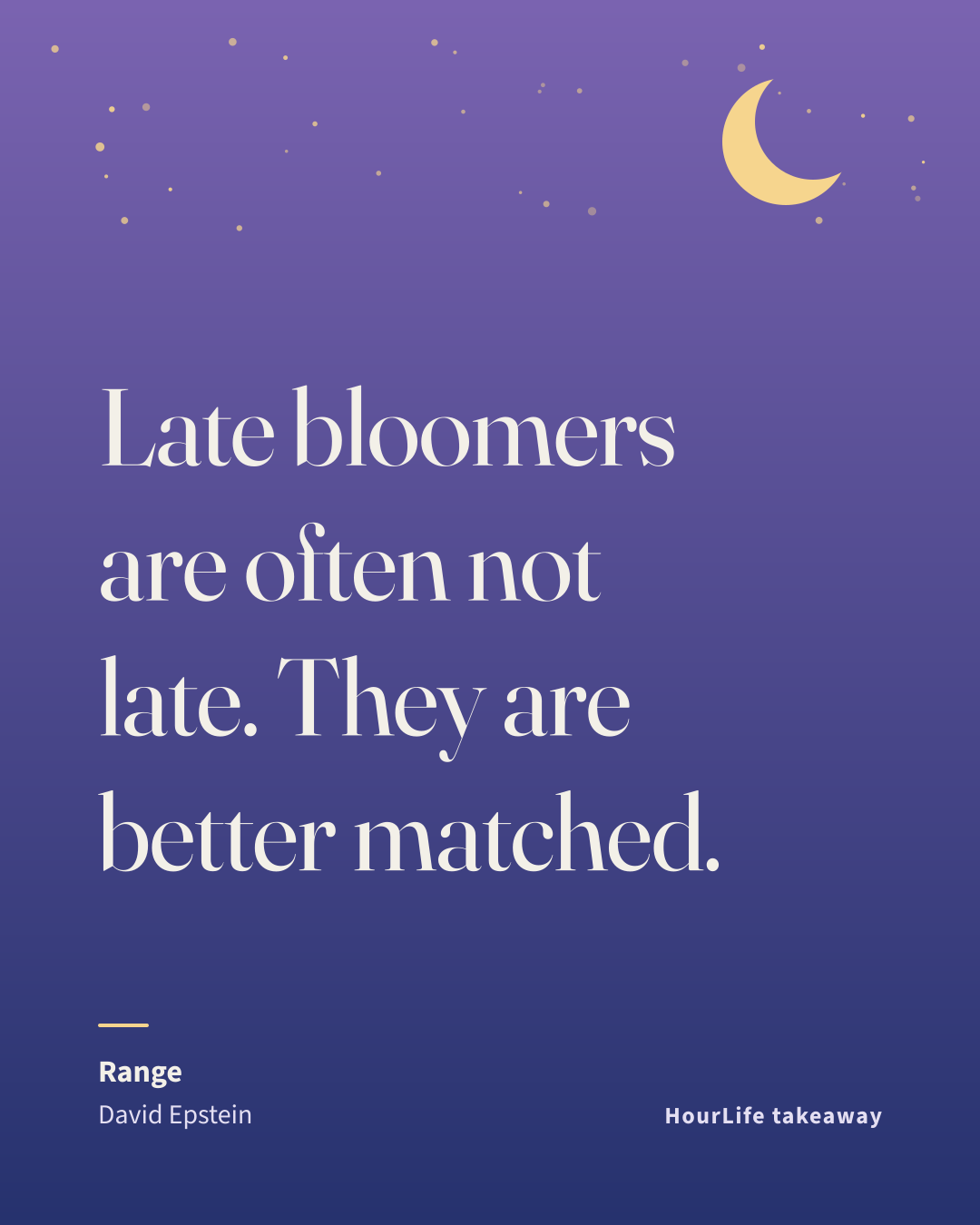
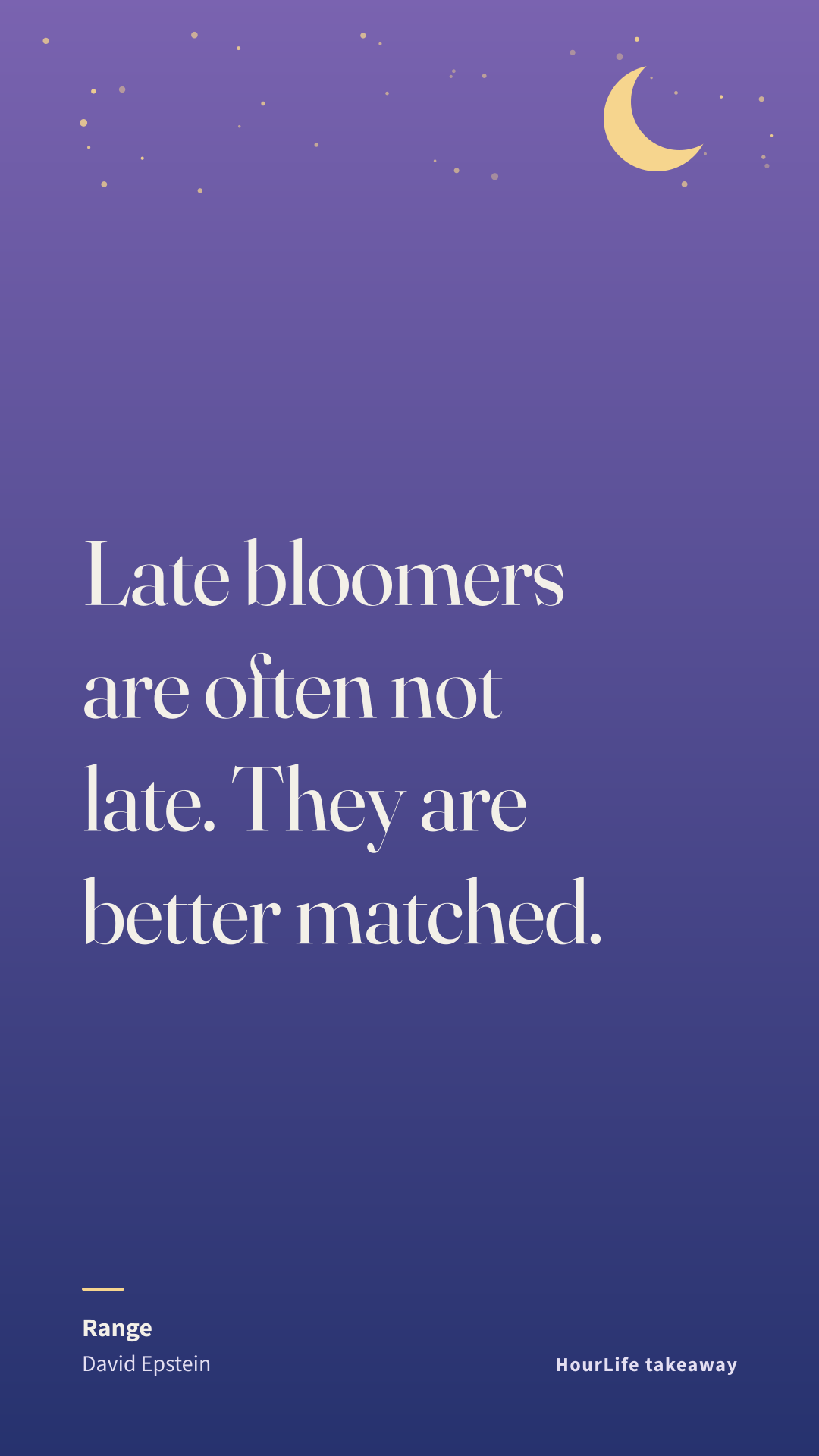
Late bloomers are often not late. They are better matched.
The slower path can look inefficient until the right domain makes accumulated variety suddenly useful.
HourLife turns these ideas into a daily system — goals, habits, focus, and reflection in one private place.